AI Copilots That Automate Work — Without Losing Trust
How to put AI copilots into business workflows so they draft, route, and assist — with grounding, guardrails, and human control where it matters.

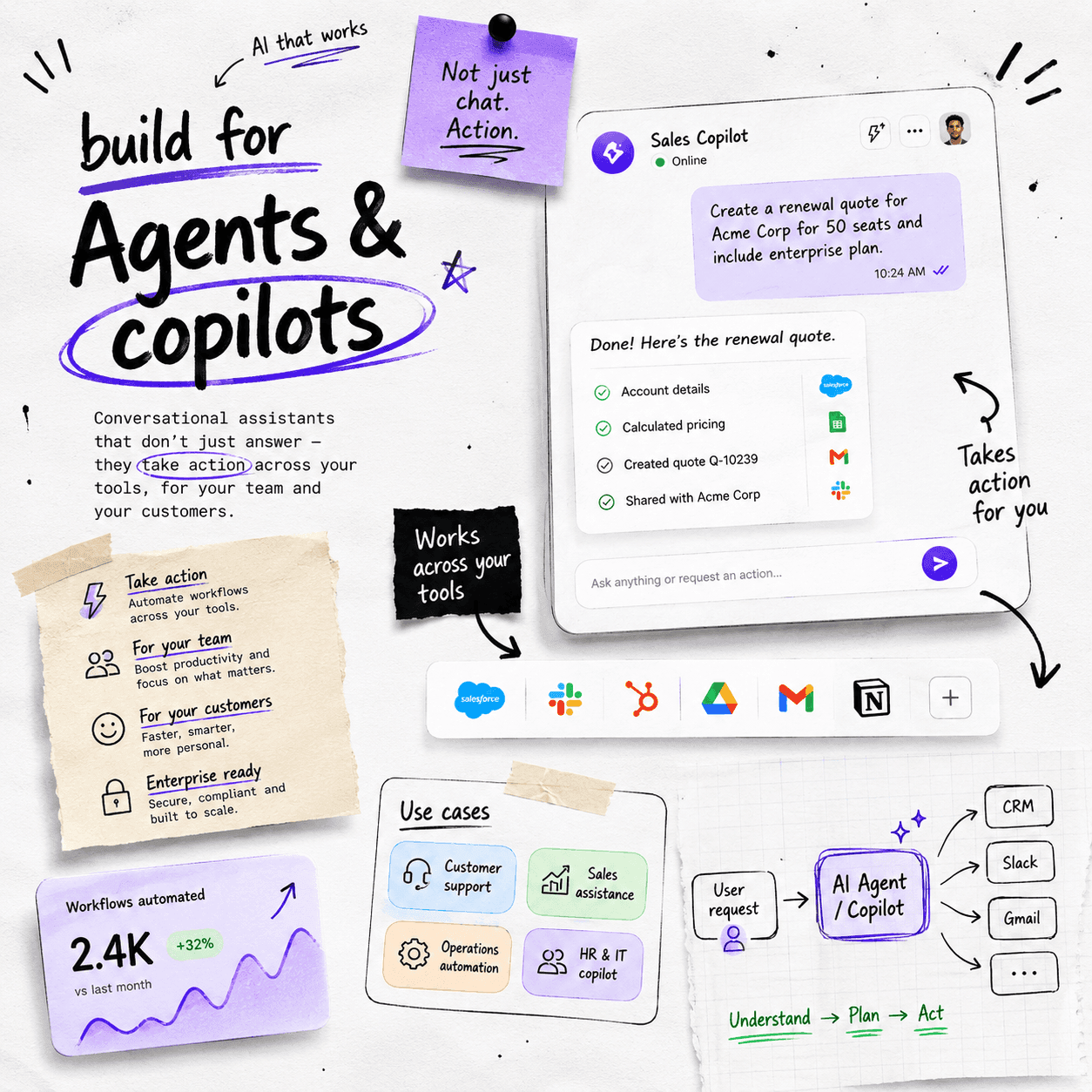
A copilot is easy to demo and hard to trust. In a walkthrough almost anything looks magical. The gap shows up when real employees ask real questions and the system invents an answer. The difference isn’t the model — it’s the product wrapping it.
Automate a job, not a chat window
Don’t ship “AI in the sidebar.” Ship “draft the customer reply,” “summarize this ticket,” or “find the clause that covers refunds.” A copilot tied to a job has a success state you can measure.
Ground every claim
Retrieval, citations, and a hard rule that answers come from provided context turn a guesser into an assistant. When people can verify, they forgive misses — because they can check.
- Retrieve context first, then generate
- Show sources inline
- Make “I couldn’t find that” a designed response
- Keep humans approving high-stakes sends and changes
“Users don’t need a copilot that’s always right. They need one that’s honest and easy to correct.”
Keep reading
Human-in-the-Loop Approvals: Queues for Irreversible AI Actions
How to design approval queues for AI agents that send money, change records, or message customers — so automation stays fast without shipping irreversible mistakes.
ReadAutomationAI Eval Harnesses in CI: Catch Regressions Before Users Do
How to wire LLM eval suites into pull requests — golden cases, score thresholds, cost budgets, and failure reports — so prompt and retrieval changes fail closed in CI.
ReadAutomationLLM Observability: Know What Your Model Did in Production
Traces, costs, failure modes, and eval hooks — a practical observability stack so AI features stop being black boxes when something goes wrong.
Read