Multi-Agent Orchestration That Does Not Collapse in Production
How to design multi-agent systems with clear roles, handoffs, shared state, and failure budgets — so specialists collaborate without burning tokens or inventing side effects.

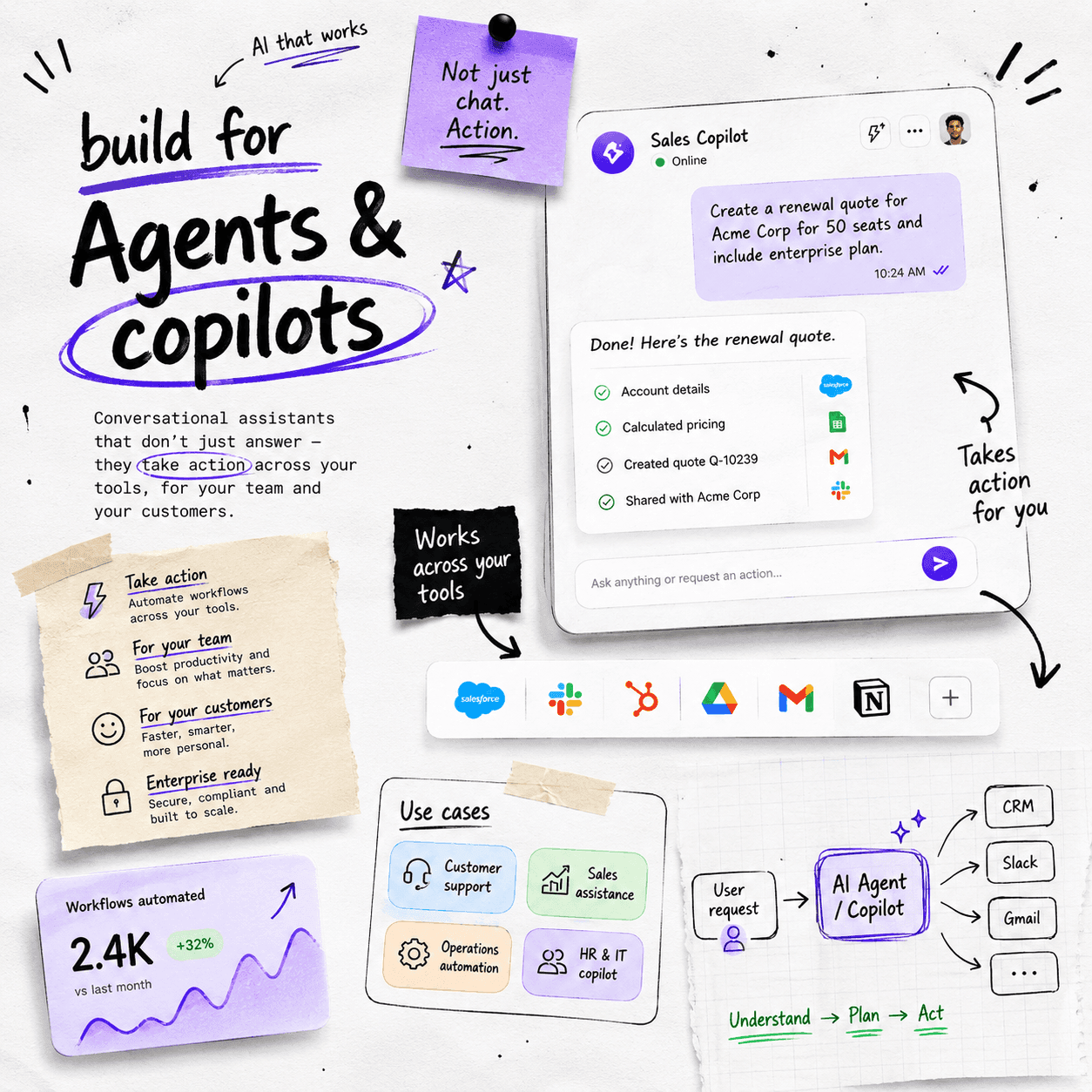
One capable model with good tools often beats a swarm of agents. When you do need multiple agents — research, planning, writing, verification — the hard part is not prompting each one. It is orchestration: who owns the goal, what state is shared, when work hands off, and what happens when a specialist fails or loops.
Start with roles, not with a graph
Name the jobs before you wire the wires. A useful agent has a narrow mandate, a bounded tool set, and a clear success signal. Vague roles ("helper," "analyst," "worker") produce overlapping calls, duplicated retrieval, and arguments about who should write. Prefer roles you could explain to a new engineer in one sentence.
- Planner: break the goal into steps, never execute irreversible tools
- Retriever: fetch and cite sources; no product writes
- Worker: perform one class of action with typed tools
- Critic / verifier: check outputs against schema, policy, and eval checks
- Orchestrator: decide the next role, merge results, and stop the run
Handoffs need contracts
Passing a chat transcript between agents is not a handoff. Pass a structured packet: goal, constraints, artifacts so far, open questions, and the next decision required. The receiving agent should not re-derive the entire conversation. If you cannot serialize the handoff, you cannot debug it.
Shared state is a product surface
Keep a single source of truth outside any one model: task status, retrieved docs with IDs, draft objects, tool results, and approval flags. Agents read and propose updates; your server validates and persists. That is the same rule as tool calling — the model suggests, the system of record decides.
Pick a topology you can explain
Most production systems need one of a few shapes. A sequential pipeline (retrieve → draft → verify) is easiest to observe. A supervisor that routes to specialists works when tasks branch. Parallel fan-out helps independent subtasks — then you need a merge step that reconciles conflicts, not a hope that the last agent "figures it out."
- Pipeline: fixed stages, clear SLAs per stage, easy rollback
- Supervisor + specialists: dynamic routing with a hard stop condition
- Fan-out / fan-in: parallel work with an explicit merge and conflict policy
- Avoid fully connected chat between agents — gossip is not orchestration
Budget failures the way you budget tokens
Multi-agent runs fail in characteristic ways: infinite planner loops, critic–worker ping-pong, specialists that keep retrieving the same empty result, and partial writes left half-done. Set budgets before you ship: max steps, max tool calls, max tokens, and max wall-clock time. When a budget trips, fail closed to a safe UI state — do not quietly continue with a truncated plan.
“If you cannot say who decides to stop, you do not have an orchestrator — you have a meeting that never ends.”
Observe the graph, not just the chat
Log every handoff, tool call, and state mutation with agent id, step index, schema version, and cost. When something ships wrong, you need to know which specialist proposed the bad write — not which paragraph in a 40-turn transcript felt suspicious. Tie orchestration traces to the same eval cases you already run for single-agent features.
- Trace agent id + role on every span
- Record handoff payloads, not just final user-visible text
- Alert on retry storms and critic loops above a threshold
- Replay failed runs from stored state, not from memory of the chat
What we ship at Brutanix
At Brutanix Studios we design multi-agent systems like distributed workflows: typed handoffs, server-owned state, narrow tools, and hard stop conditions. We start with one strong agent and add specialists only when the product needs a clearer separation of authority — then we instrument the graph so production failures are diagnosable, not mysterious.
Keep reading
Model Routing and Cascades That Cut Cost Without Killing Quality
How to route AI requests across cheap and frontier models — classifiers, confidence gates, cascades, and fallbacks that protect quality while keeping unit economics sane.
ReadAIPrompt Injection Defenses That Survive Production
A practical playbook for defending AI products against prompt injection — trust boundaries, tool allowlists, untrusted content handling, and evals that catch attacks before users do.
ReadAIEdge Inference vs Cloud LLMs: When On-Device Actually Wins
A practical decision guide for shipping AI on-device or at the edge — latency, privacy, cost, model size, and the hybrid patterns that survive production.
Read